



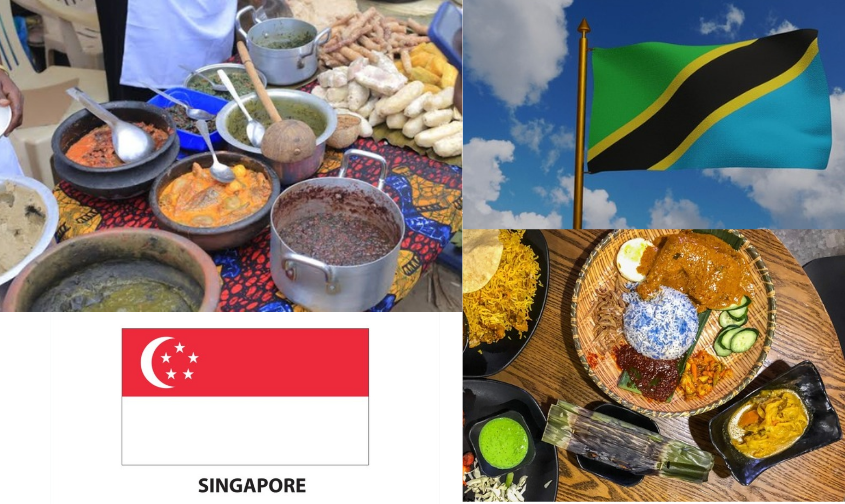
Culture often serves as a mirror of society—reflecting how people live, believe and relate to one another. A comparison between Singapore and Tanzania reveals a compelling narrative of contrast and convergence, where modernity meets tradition.
Singapore, a small but highly developed nation, stands as a global hub of commerce and technology. Tanzania, by contrast, is rich in cultural heritage, shaped by centuries of African traditions and communal values. Despite their geographical and economic differences, both countries offer unique insights into how diverse societies function and thrive.
One of the defining features of Singapore is its multicultural composition. The population is largely made up of people of Chinese, Malay and Indian descent, creating a vibrant blend of traditions, languages and customs. Tanzania, too, is home to remarkable diversity, with over 120 ethnic groups. However, it has achieved a strong sense of national unity through the widespread use of Kiswahili, a unifying language that bridges cultural divides.
Language plays a central role in shaping identity. In Singapore, English is the primary language of administration, education and business, complemented by Mandarin, Malay and Tamil. A colloquial blend known as Singlish is also widely spoken. In Tanzania, Kiswahili serves as both a national and unifying language, while English is used in formal settings such as education and government. The contrast is clear: Singapore operates within a multilingual framework, while Tanzania leans on linguistic unity.
Religious diversity is another point of similarity. Singapore embraces a range of faiths, including Buddhism, Islam, Hinduism and Christianity, with places of worship often located in close proximity. Tanzania mirrors this spirit of tolerance, with large Muslim and Christian populations coexisting peacefully—an enduring example of interfaith harmony in East Africa.
However, differences become more pronounced in lifestyle and governance. Singapore is known for its fast-paced urban life, underpinned by advanced infrastructure and strict adherence to rules. Cleanliness, order and efficiency are deeply embedded in daily life, with even minor offences subject to penalties. Tanzania, on the other hand, offers a more relaxed pace of life, particularly in rural areas where traditions and community ties remain central.
Cuisine further illustrates cultural identity. Singapore’s food scene reflects its Asian roots, with iconic dishes such as Hainanese Chicken Rice and Laksa. In Tanzania, meals are shaped by local ingredients and coastal influences, featuring staples such as rice, fish and spiced dishes rooted in Swahili and Indian Ocean traditions.
Festivals and public celebrations also highlight cultural diversity. Singapore marks a wide range of events, including Chinese New Year and Deepavali, reflecting its multi-ethnic population. Tanzania celebrates religious and national holidays such as Eid and Christmas with strong communal participation and shared cultural expression.
In essence, Singapore and Tanzania present two distinct yet equally compelling cultural landscapes. One is driven by rapid modernisation and global integration; the other grounded in tradition and collective identity. Yet both demonstrate that diversity, when embraced, can be a powerful force for unity and national cohesion.
It is, ultimately, a story of two nations—one propelled by innovation, the other anchored in heritage—each offering valuable lessons on the enduring strength of culture.