



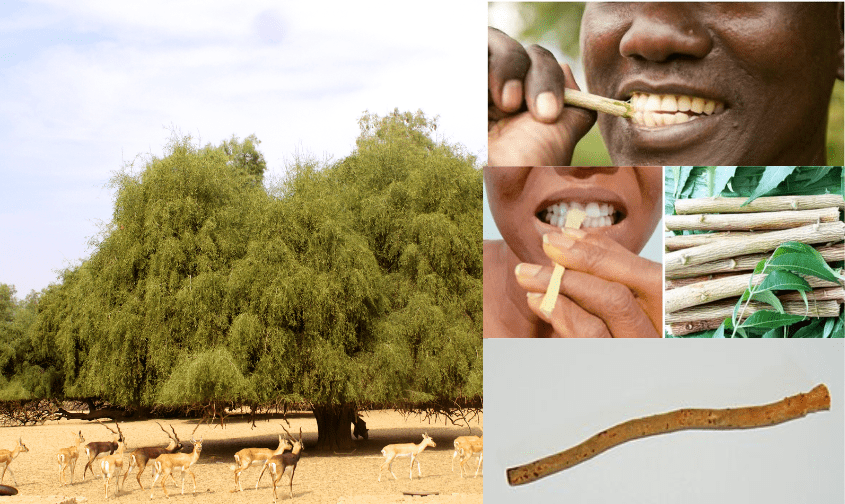
While national statistics show that 76.5% of Tanzanians face the challenge of tooth extraction due to decay, environmental stakeholders in the country have begun advocating for a return to the traditional use of ‘miswaki sticks’ (natural chewing sticks) that contain plant-based fluoride compounds to help control the situation.
Speaking yesterday at Bomambuzi Secondary School in Kaloleni Ward, Moshi District, Kilimanjaro Region, Dismas Mlaki, the Coordinator of the Kili Climate Day Project, said they launched the campaign because long-term use of plastic toothbrushes has shown limited benefits for dental health.
“We are encouraging the use of miswak trees because they contain nutrients, including natural fluoride liquid, which helps when brushing your teeth. A single stick can be used for one or two months without harming the tree. As a start, our campaign aims to reach more than 1,500 students in the Arusha and Kilimanjaro regions.
He added, “The tooth brushing hygiene program specifically focuses on educating people on how to properly use the miswak stick as an effective source of dental strength. For a long time, we have relied on plastic toothbrushes, whereas our ancestors used these natural sticks to help strengthen teeth and prevent bacteria.”
The project is overseen by the Jane Goodall Roots & Shoots Institute and is implemented by the Green Manjaro Foundation in collaboration with the PHARUS Institute of the Netherlands.
According to Mlaki, the miswak tree has no negative environmental impact because it is not cut down; only small branches are trimmed, allowing the tree to continue growing and regenerating new branches.
Additionally, the head of Bomambuzi Secondary School, Titus Ngulai, said that miswak sticks help strengthen teeth more effectively compared to plastic toothbrushes.
“It is true that miswak sticks contributed to our elders having strong teeth for many decades, unlike today where young people undergo tooth extraction at an early age. My advice to society is to protect our natural heritage. Let us restore miswak trees and forests that have been degraded by modernization. The miswak tree is beneficial and good for oral health,” he said.
One of the students at Bomambuzi Secondary School, Joy Julius, noted that young people, especially students, are ready to contribute to change in the country, including protecting the ecology of Mount Kilimanjaro.
“A tree naturally contains its own moisture, which helps prevent bad breath. There are certain plants that, when used, keep the mouth fresh, especially for those experiencing tooth sensitivity. We have learned how these trees help us clean our teeth,” she said.
According to the Assistant Director of Oral Health Services at the Ministry of Health, the proportion of Tanzanians at risk of tooth decay has reached 76.5%.