


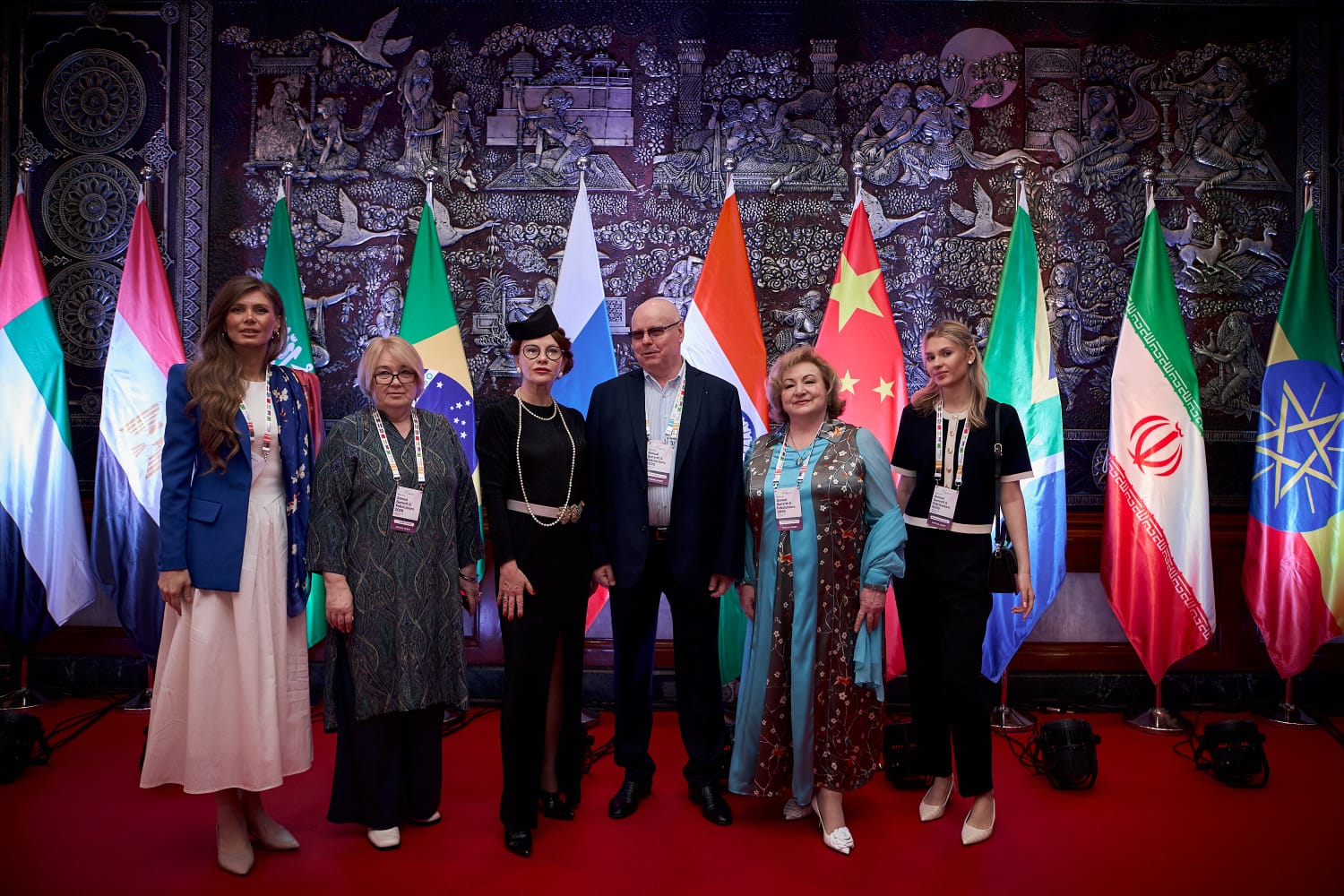
New Delhi, March 23, 2026 — The World Public Summit: India has officially commenced in New Delhi under the theme “A New World: India in the Architecture of a Shared Future,” positioning India at the forefront of shaping a more inclusive and cooperative global order.
Held at the Hyatt Regency from March 23 to 26, the summit convenes a diverse coalition of global leaders, policymakers, scholars, business executives, and civil society representatives.
Jointly organized by the World Peoples Assembly and the BRICS Chamber of Commerce and Industry, the summit serves as the opening chapter of a broader international initiative that will unfold across multiple regions in 2026, including the Arab World, Latin America, Africa, and Europe.
The New Delhi gathering sets the tone for a year of global engagement focused on defining shared values and practical pathways for international collaboration.
India’s role as host reflects its growing global influence and strategic importance in today’s evolving multipolar landscape. With its leadership in multilateral platforms and its 2026 BRICS presidency, India is increasingly seen as a bridge between regions, economies, and cultures—making it a natural setting for a dialogue centered on unity, cooperation, and sustainable development.
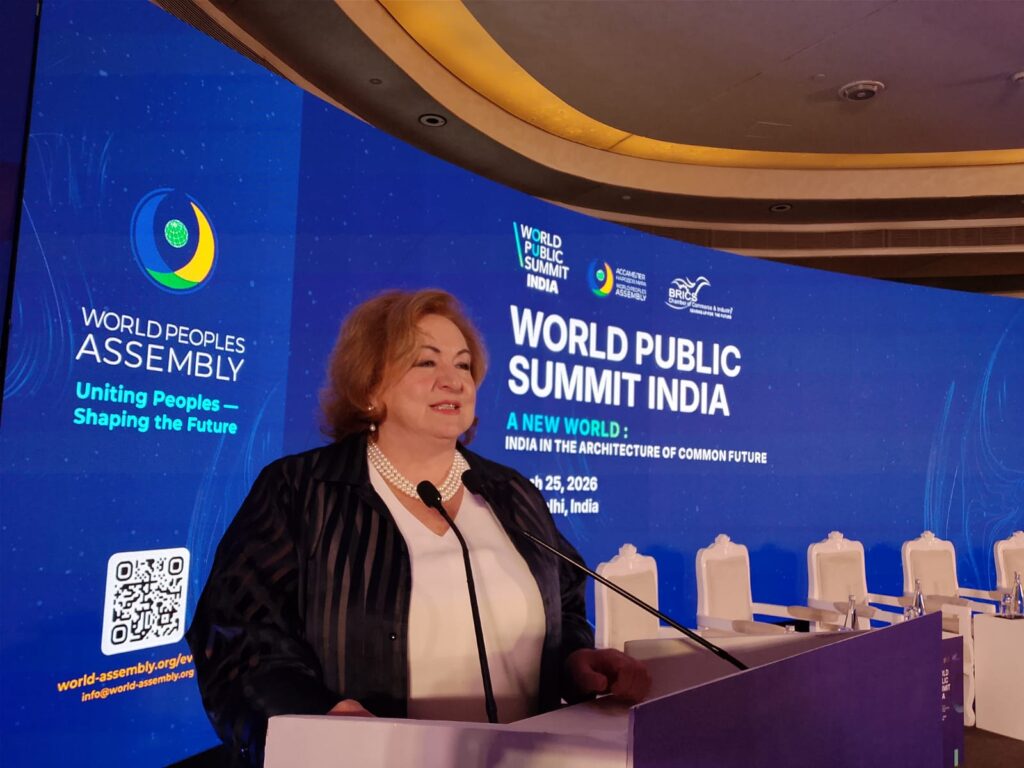
The summit features an impressive roster of participants, including Sameep Shastri, Deputy Chairman of the BRICS Chamber of Commerce and Industry; Sergey Cheryomin, Minister of the Moscow Government; Raksha Khadse, India’s Minister of Sports and Youth Affairs; Oleg Skripochka, renowned cosmonaut and Hero of the Russian Federation; and media entrepreneur Parul Mahajan, alongside diplomats, cultural leaders, and international experts from across sectors.
Across four days, the summit explores a wide-ranging agenda focused on building a shared future grounded in trust and common values. Core themes include the role of cultural and spiritual heritage in uniting societies, the emergence of conscious and values-driven leadership, and the intersection of tradition and innovation in modern development.
Additional discussions highlight the influence of media in shaping global narratives, the importance of ethical and partnership-based economic models, and the expanding role of public diplomacy in bridging divides.
Opening day sessions set a strong intellectual and strategic tone. A featured seminar, “Media and Shared Values: Shaping a Common Future,” examined the media’s responsibility in fostering understanding and strengthening global dialogue.
This was followed by a high-level convening of the Scientific and Expert Council of the World Peoples Assembly, focused on articulating a framework of shared values for humanity’s future.
The program includes a dynamic mix of plenary sessions, panel discussions, and international roundtables addressing topics such as cultural diplomacy, youth engagement, women’s leadership, family as a pillar of societal well-being, and the future of global cooperation—even extending to space as a shared frontier for humankind.
Highlight sessions include “India: Unity in Diversity—Values That Unite,” “Peace through Culture,” and “Culture of Trust: Building an Economy Based on Values,” each designed to move beyond theory toward actionable ideas and collaborative solutions.
Svetlana Smirnova, Chairman of the General Council of the World Peoples Assembly, underscored the summit’s broader significance, stating:
“A new world is emerging—one defined by dialogue, trust, and shared values—and this summit reflects that transformation in action.”
Beyond dialogue, the summit aims to deliver tangible outcomes. Key objectives include developing practical models of cooperation rooted in the Global South, strengthening networks of public diplomacy, and fostering long-term partnerships between Indian institutions and international stakeholders.
The summit will culminate in the adoption of the Delhi Declaration, a strategic document expected to influence the global agenda leading into the Second World Public Summit, “A New World: Values That Unite.”
As the first in a global series, the World Public Summit: India not only reinforces India’s leadership on the world stage but also advances the mission of the World Peoples Assembly—to build a more connected, cooperative, and values-driven world through dialogue and shared purpose.