



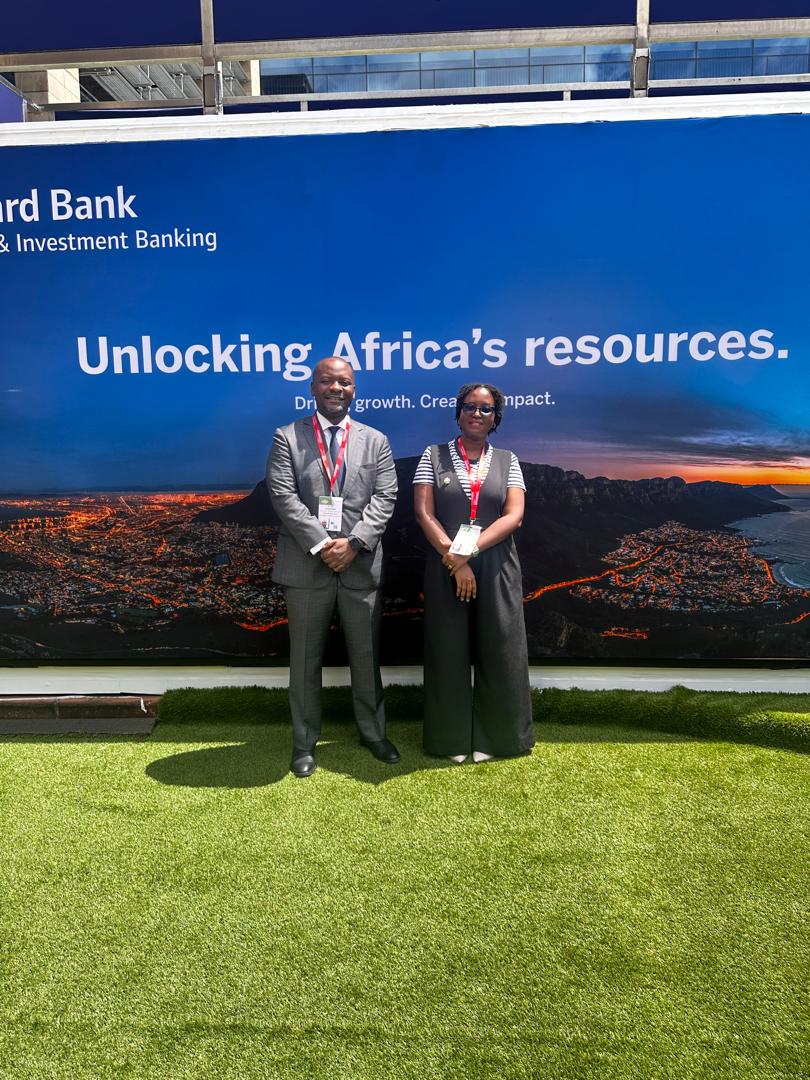
Dar es Salaam, Tanzania – Monday, 16 February 2026: Tanzania’s mining sector is entering a more decisive phase of growth, one increasingly shaped by execution, infrastructure readiness and access to long term capital, as the country positions itself for sustained value creation across the industry.
Mining now contributes about ten percent of Tanzania’s gross domestic product, a sharp increase from four percent in 2007, and has become the country’s second largest foreign exchange earner after tourism. Gold remains the dominant commodity, with leading producers recording combined output of about 335,000 ounces by the third quarter of 2025.
As Mining Indaba 2026 comes to an end in Cape Town, Tanzania’s experience is drawing attention as an example of how mining jurisdictions are moving beyond opportunity driven expansion toward delivery, discipline, and long term investment readiness.
“The conversation around mining has evolved,” said Elias Ngunangwa, Head of Client Coverage for Corporate and Investment Banking at Stanbic Bank Tanzania. “The focus today is on whether projects can be delivered efficiently, supported by the right infrastructure, financing structures and operating environment.”
Infrastructure and energy shape competitiveness
Infrastructure and energy reliability are emerging as central drivers of mining competitiveness. Continued investment in transport corridors, including roads and rail links, is improving the movement of minerals, consumables and heavy equipment, while stronger power connectivity is reducing operational uncertainty for mining operations.
Mining companies are increasingly connecting to the national electricity grid, lowering reliance on diesel powered generation and stabilising operating costs. These shifts are influencing how investors assess project risk and long term viability.
“Infrastructure and power are no longer background considerations,” Ngunangwa said. “They directly affect timelines, costs and the ability of mining projects to move from development into steady production.”
Financing across the mining value chain
As the sector matures, financing requirements are also changing. Capital is increasingly required not only for mine development, but across the wider mining value chain that supports ongoing operations.
According to Edgar Mwasha, Vice President, Diversified Industries at Stanbic Bank Tanzania, sustainable mining growth depends on financing models that reflect how the sector operates in practice.
“Mining functions as an ecosystem,” Mwasha said. “Beyond extraction, there are suppliers, contractors, logistics providers and service companies that need access to capital to keep operations running smoothly. Financing needs to support that full chain if growth is to be sustained.”
Stanbic Bank Tanzania’s Corporate and Investment Banking business provides financing solutions spanning transactional banking, short term working capital, and long term structured finance to support mine development, expansionary capital expenditure and infrastructure linked to mining operations.
Diversification and emerging minerals
While gold continues to anchor Tanzania’s mining output, investment interest is expanding into critical minerals such as graphite and nickel. Over the past four years, new investors have entered the market, supported by strategic licences aimed at accelerating exploration and development.
These minerals are increasingly important to global energy transition technologies, including battery manufacturing and clean energy systems. Their development is widening the scope of mining investment while increasing the importance of logistics, processing capacity and reliable energy supply.
“As global supply chains evolve, readiness matters,” Mwasha said. “Projects that demonstrate strength in infrastructure, energy and governance are better positioned to attract long term capital.”
Execution as the defining test
Regulatory improvements, including clearer licensing processes and stronger engagement between the public and private sectors, have helped improve transparency and predictability for investors. However, sector leaders note that delivery will now be the defining test.
For Esther Manase, Head, Corporate and Investment Banking at Stanbic Bank Tanzania, alignment between capital, infrastructure and execution will determine how much value the sector ultimately delivers. “Tanzania has built a solid foundation for mining growth,” Manase said. “The next phase is about execution. Aligning investment, infrastructure and financing in a way that supports long term value creation across the sector.”
As Mining Indaba 2026 closes, Tanzania’s mining sector is increasingly being assessed through this lens. With rising output, growing diversification, and improving infrastructure, the conditions for growth are in place.
What will matter now is how effectively these elements come together to support consistent, responsible and sustainable development over time.