



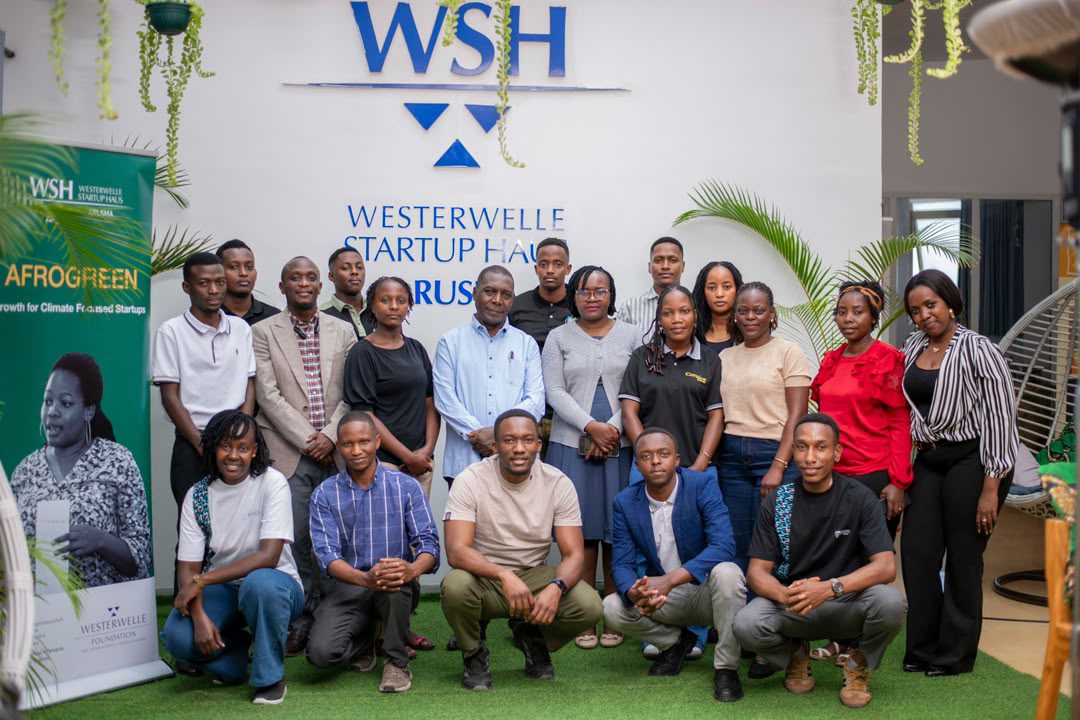
TWENTY Tanzanian businesses developing solutions to climate change are set to receive business development and investment-readiness support under the third cohort of the AfroGreen programme, as efforts to promote green entrepreneurship and job creation gain momentum.
The nine-month initiative, launched by Westerwelle Startup Haus Arusha (WSHA) on October 30, 2026, brings together businesses working in renewable energy, circular economy, climate-smart agriculture, climate adaptation and sustainable value chains.
Co-financed by the Embassy of Switzerland in Tanzania and the Westerwelle Foundation in Germany, the programme has selected 20 businesses, eight of which, equivalent to 40 per cent, are women-led. Fifteen are based in Arusha, while the remaining five operate in Dar es Salaam and Iringa.
The latest cohort builds on the first two editions, which supported 30 startups, contributed to the creation of 42 jobs and mobilised more than €132,000.
Under the new programme, all 20 businesses will receive support to prepare for fundraising and measure their climate impact. AfroGreen also targets the creation of at least 40 jobs and securing two to three investment commitments.
Westerwelle Foundation Tanzania Country Director Isaack Shayo said the programme reflected the organisation’s shift towards supporting businesses beyond their early stages of development.
“Four years ago, we opened WSHA to connect Tanzanian entrepreneurs to the Westerwelle Foundation’s global network. Many of those founders have now outgrown early-stage support, and our plan to 2030 focuses on what they need next: investment readiness, international connections, and closer ties with Arusha’s business community for mentorship, trade, and finance,” he said.
Shayo added that AfroGreen was part of that strategy, supporting climate-focused businesses capable of creating jobs while helping communities adapt to the effects of climate change.
The programme is also supported by partnerships aimed at giving entrepreneurs access to finance, technical expertise and business networks.
Switzerland is supporting AfroGreen for the second time, with the Embassy of Switzerland in Tanzania’s Head of Employment and Income, Andrea Inglin, describing the initiative as an important response to climate-related challenges.
“Climate change is one of the defining challenges of our time. It affects every aspect of our lives, and Tanzania is no exception. Access to finance, technical expertise, networks and the right business support can make all the difference,” she said.
Since opening in 2022, WSHA has supported 809 entrepreneurs, including 309 startups, with women accounting for 55 per cent of those reached.
Its fourth anniversary brought together entrepreneurs, investors, development partners and government representatives, including Arusha City Council Youth Officer Evodius Cleophace, who highlighted the contribution of such initiatives to expanding opportunities for young people.
Cleophace said the programmes complemented government efforts by reaching entrepreneurs who might otherwise struggle to access business support.
He also revealed that during the first quarter of the 2026/27 financial year, the council issued TZS 2 billion in loans to groups of youth, women and people with disabilities, with TZS 578.7 million allocated to youth.
He cited Himan Investment, a company that participated in an earlier AfroGreen cohort, as an example of a business that had benefited from public financing after receiving more than TZS 130 million through the Youth Development Fund.
He encouraged young entrepreneurs to seek out available opportunities and use them to grow their businesses.
Collins Kimaro, a WSHA board member and co-founder of Obuntu Hub, which became WSHA through its partnership with the Westerwelle Foundation, also challenged the new participants to recognise their potential.
“If we were able to grow into this organisation, then what are you capable of?” he asked.
For the selected businesses, the programme offers an opportunity to strengthen their operations and prepare to attract capital.
Fortunatus Fungatwende, founder of Innolif Aquaculture Group, said the initiative would help participating businesses establish stronger structures and become better prepared to secure investment.
“AfroGreen is a chance for us to grow our businesses and put the right structures in place so that we can attract investment. We expect to leave the programme investment-ready, with the tools and connections to raise the capital we need to scale,” he said.
Participants will receive business training, individual coaching, investor-readiness support and access to an angel investor network.
The programme will culminate in a Demo Day scheduled for May 28, 2027, when participants will present their businesses to potential investors.
As WSHA enters its fifth year, the organisation says it will continue supporting Tanzanian entrepreneurs to build sustainable businesses, attract investment and create jobs while developing solutions to climate challenges.