



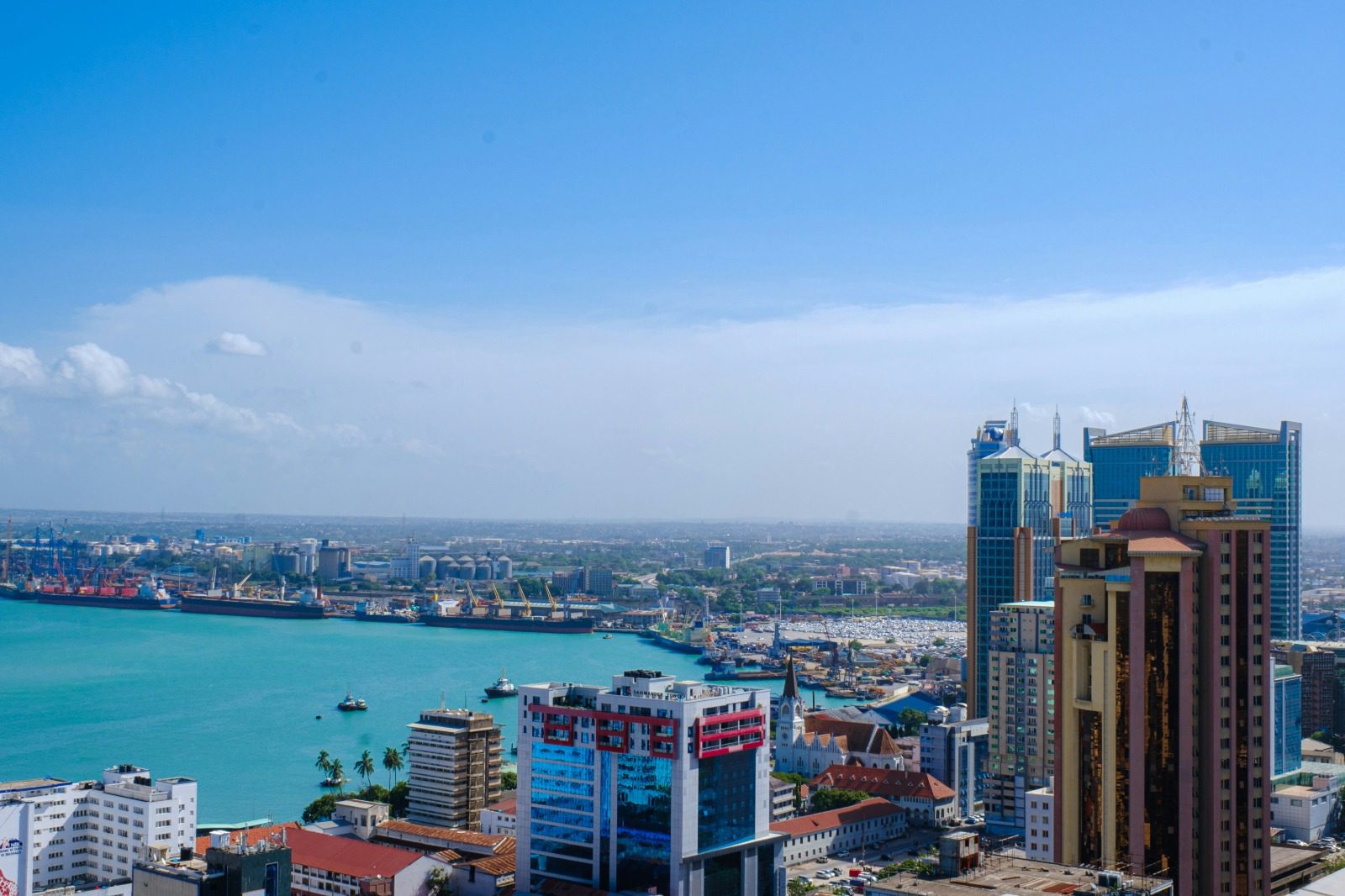
Tanzania has made considerable progress in expanding electricity access, but millions of people remain without a connection. In a country of approximately 70 million people, an estimated 33.5 million still lack electricity at home. Meanwhile, growing demand from businesses, industries and cities is placing increasing pressure on the country’s electricity system.
According to Tanzania’s Ministry of Energy, electricity infrastructure had reached areas home to 85.5% of the population by March 2026, but only 52.1% of Tanzanians were connected. The gap was particularly pronounced in rural areas, where just 37.1% had a connection.
Under its National Energy Compact, Tanzanian government aims to increase electricity connectivity to 75% by 2030. The country is also participating in Mission 300, a joint initiative of the World Bank and African Development Bank seeking to provide electricity access to 300 million Africans by the end of the decade. The Rural Energy Agency is supporting this effort through projects intended to extend electricity services to 9,000 subvillages.
However, expanding access also means increasing electricity supply. Tanzania has already made substantial investments in domestic electricity generation. The most significant recent development is the Julius Nyerere Hydropower Project, a 2,115-megawatt facility on the Rufiji River. In August 2026, TANESCO reported that the plant had supplied 43.5% of electricity fed into the national grid in 2025, with its contribution rising to approximately half during 2026.
Hydropower now accounts for the largest share of Tanzania’s installed generating capacity, followed by thermal generation, principally natural gas. Solar energy is beginning to contribute, with further projects planned. The expansion of domestic generation has strengthened the country’s electricity supply, shifting attention towards the challenge of meeting future demand.
In October 2026, Energy Minister Juma Homera announced that Tanzania was targeting 8,000 MW of generating capacity by 2030, compared with approximately 4,646 MW at the time. Meanwhile, the government’s electricity-sector reform strategy forecasts annual electricity consumption rising from approximately 16,000 gigawatt-hours in 2025 to nearly 41,000 gigawatt-hours by 2030.
That growth reflects more than household electrification. Manufacturing, transport infrastructure, urban development and new industrial projects will all require dependable electricity supplies. Meeting this demand will involve expanding existing sources of generation while considering how other technologies might contribute to a more diversified electricity system.
Nuclear power is one possibility. Unlike solar and wind, nuclear plants can generate electricity around the clock, providing a steady supply for businesses, industry and households. Conventional nuclear power stations, however, require substantial investment and electricity networks capable of accommodating their output.
Smaller reactors could offer a different approach. Small modular reactors (SMRs) are designed to generate less electricity than conventional large reactors, allowing generating capacity to be added in smaller increments as demand grows. Some designs could also be manufactured partly in factories, potentially simplifying construction.
These reactors can be installed on land, but some developers are exploring another possibility: placing them aboard floating power plants. Such facilities generate electricity offshore and deliver it to consumers through connections on land. They could provide an alternative to conventional power stations in coastal regions, on islands or near industrial facilities where construction and infrastructure development present particular challenges.
Several international projects illustrate how floating nuclear technology is developing. In July 2026, South Korea’s Samsung Heavy Industries and American engineering company Sargent & Lundy announced an agreement to develop a standardised floating SMR platform.
Russia’s Rosatom already operates a floating nuclear power plant, Akademik Lomonosov, which supplies electricity and heat to the remote Arctic town of Pevek. In October 2026, the company signed an agreement with an Indonesian partner concerning two floating nuclear units intended to supply electricity to Halmahera Island. Speaking at the Russia–Africa Summit in October 2026, Rosatom Director General Alexey Likhachev identified Tanzania, alongside Namibia and Togo, as one of three African countries with which the company was holding advanced discussions on floating nuclear power plants.
For Tanzania, these developments offer an opportunity to examine whether smaller nuclear technologies could eventually contribute to regional electricity networks or supply growing industrial centres, particularly along the country’s Indian Ocean coastline. Such applications would depend on local electricity demand, suitable infrastructure and their economic competitiveness with other generating options.
Tanzania already has experience in nuclear science and technology through institutions such as the Tanzania Atomic Energy Commission. Moving into nuclear electricity generation, however, would require further regulatory development, specialised personnel, financing and supporting infrastructure. Many SMR designs also remain at an early stage of commercial development, making their eventual costs and deployment timelines difficult to predict.
For now, Tanzania’s electricity expansion will continue to depend primarily on investments in hydropower, natural gas, renewable energy and the national grid. Nuclear power could become an additional option as the country plans beyond its immediate electrification targets.
The scale of the challenge is clear: Tanzania aims to substantially increase generating capacity by 2030, while electricity consumption is projected to grow even faster. Whether nuclear energy eventually forms part of that expansion remains uncertain, but developments in smaller and floating reactors are broadening the range of technologies available to countries planning for long-term electricity demand.