



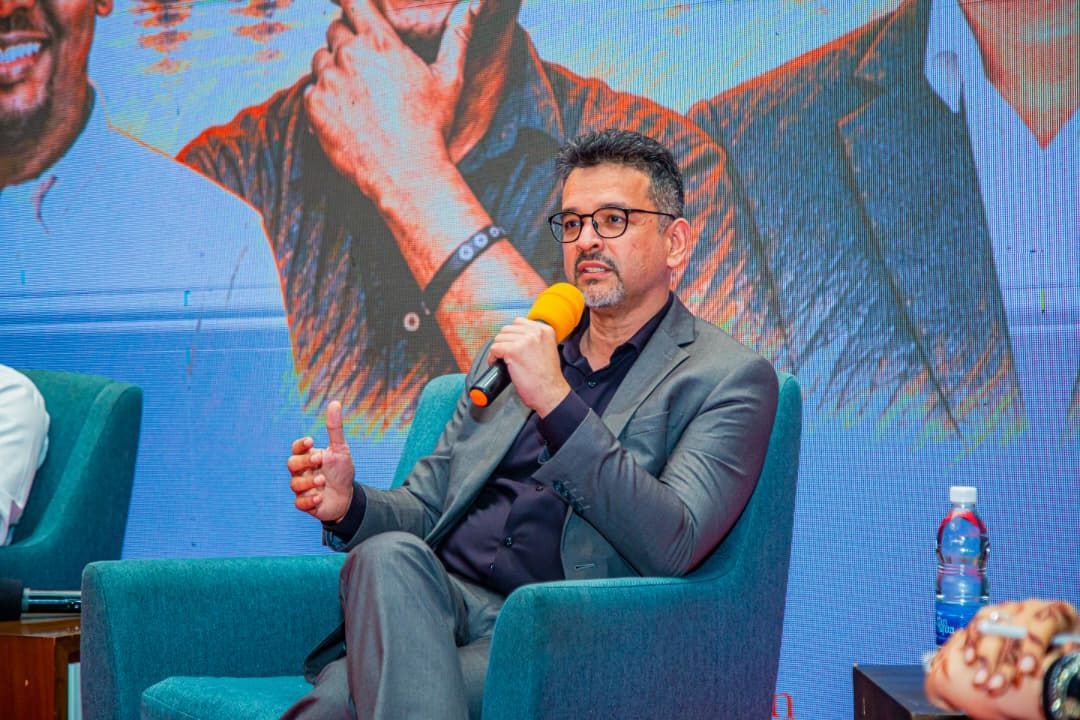
By Manish Govindji, Chief Executive Officer, Liquid Intelligent Technologies Tanzania
If Tanzania is to achieve its ambition of becoming a regional technology and innovation hub by 2050, expanding digital infrastructure will be only part of the task. The country will also need a generation capable of building the technologies, businesses and ideas that infrastructure enables.
When President Samia Suluhu Hassan launched the implementation, monitoring and acceleration tools for Tanzania’s Development Vision 2050 on 3 August, the emphasis on stronger collaboration between government and the private sector signalled how central business investment will be to the country’s development agenda.
Around 70% of Vision 2050’s implementation is expected to come from the private sector, placing particular responsibility on the technology industry to help build both the digital foundations and human capabilities a US$1 trillion economy will require.
Moving beyond infrastructure
The private sector’s major role in delivering Vision 2050 comes with real responsibility. For technology companies such as Liquid Intelligent Technologies Tanzania, that responsibility goes beyond infrastructure. Digital transformation is no longer simply about connecting people to technology; the real shift is in what they are able to do once connected.
Liquid, a business of Cassava Technologies, supports more than 2,000 businesses in Tanzania and operates within an integrated digital ecosystem spanning connectivity, data centres, cloud, cybersecurity and AI solutions, and payments capabilities.

Tanzania’s next priority should be to strengthen the relationship between digital infrastructure and local talent. Investment in digital infrastructure and technology skills is key. Despite progress, some regions still face connectivity challenges, while limited hyperscaler presence can increase costs and slow adoption. Alongside continued infrastructure development, Tanzania should attract global technology partners while building local expertise in all digital disciplines.
Together, infrastructure and talent will help businesses scale, create jobs and strengthen regional competitiveness.
That talent pipeline will need to extend well beyond technical training alone. Young Tanzanians need to see themselves as developers, engineers, cybersecurity specialists, data professionals, entrepreneurs and creators of technology. They also need the confidence to experiment, solve problems and keep learning as technology evolves. That is how digital transformation can create long-term national capability.
Liquid’s contribution includes ProjeKt Inspire, which supports practical STEM learning among young people through school-based activities, youth programmes, teacher development and learning resources. The company also sponsors the TEHAMA Awards, which recognise achievement and innovation in Tanzania’s ICT sector and provide local talent with greater visibility.
Collaboration to prepare for a digital future
There are also opportunities for collaboration between technology companies, universities, innovation hubs and global partners. Certifications, internships, mentorship and innovation programmes can help young Tanzanians gain practical experience and prepare for opportunities in the digital economy.
Recognising Tanzanian innovation is important because it changes the story from one of technology adoption to one of technology creation. There are people and organisations developing solutions here today. The challenge is to create an ecosystem that allows more of those ideas to emerge and scale.
For technology companies, that requires thinking beyond infrastructure provision alone. A network by itself does not innovate. A cloud platform by itself does not create a business. People do. Technology companies must therefore both provide the digital foundations and contribute to an environment in which Tanzanian talent can use those foundations to create.
From a consumer of technology to a producer
By 2050, Tanzania could emerge as a leading digital hub in East and Central Africa, with digital technologies embedded across sectors and a stronger local innovation ecosystem. More significantly, the country has an opportunity to move from being primarily a consumer of technology to becoming a producer and exporter of digital services, creating jobs, attracting investment and increasing its contribution to the regional digital economy.
That transition will depend on infrastructure, but also on the people able to turn it into products, services and businesses. For Tanzania’s private sector, building that capability will be central to delivering Vision 2050.
The goal is not simply to equip the next generation to use technology, but to give them the skills, confidence and opportunity to create Tanzania’s own.