



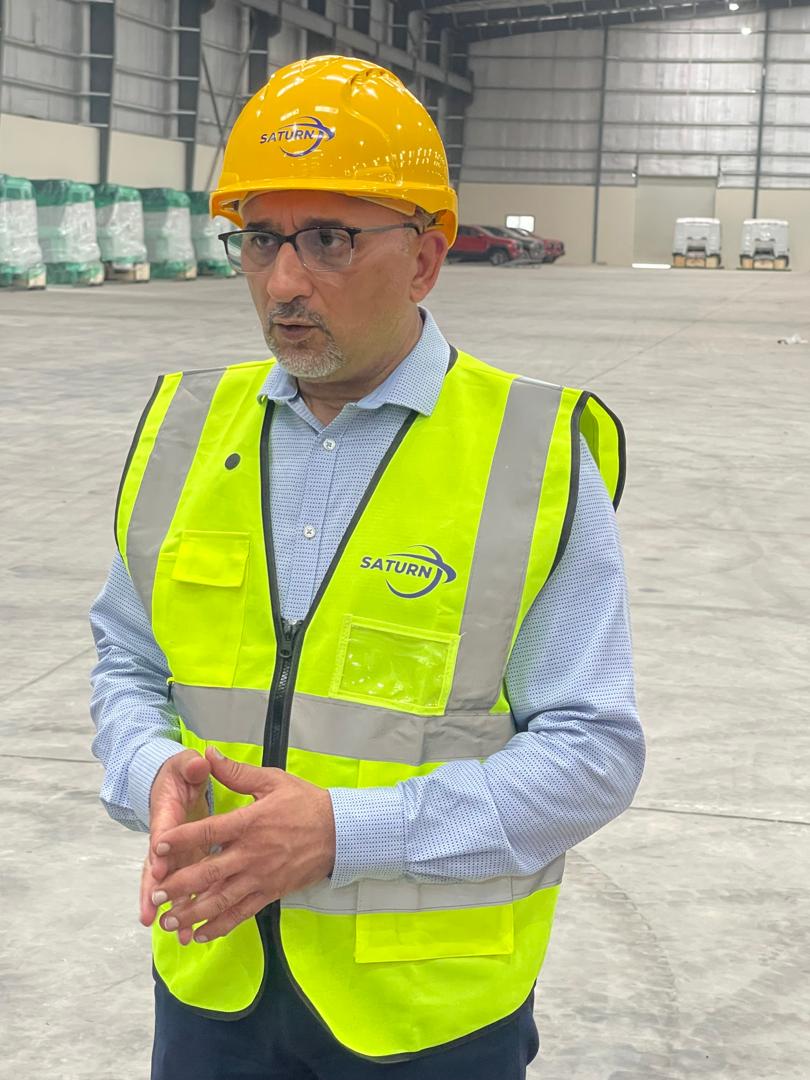
Saturn Corporation, a Tanzanian truck assembly company that operates one of the country’s leading vehicle assembly plants, is asking the Government to reinstate the 25 per cent import duty structure on imported trucks, saying the move would accelerate the growth of local vehicle assembly, create more jobs and strengthen the country’s industrialisation agenda.
The company’s Chief Operations Officer, Mehul Sachdev, says restoring the earlier duty regime would create a more balanced market for locally assembled trucks while encouraging greater investment in manufacturing. According to Sachdev, Tanzania has made significant progress in building its local automotive assembly industry, but the sector requires a supportive policy environment to compete fairly with imported trucks.
“The Government has done an excellent job in promoting industrialisation and attracting investors into manufacturing. What we are requesting is a policy environment that allows local assembly plants to compete fairly. Reinstating the 25 per cent duty structure on imported trucks will encourage more investment, expand local production, create thousands of additional jobs and reduce dependence on imports,” he says.
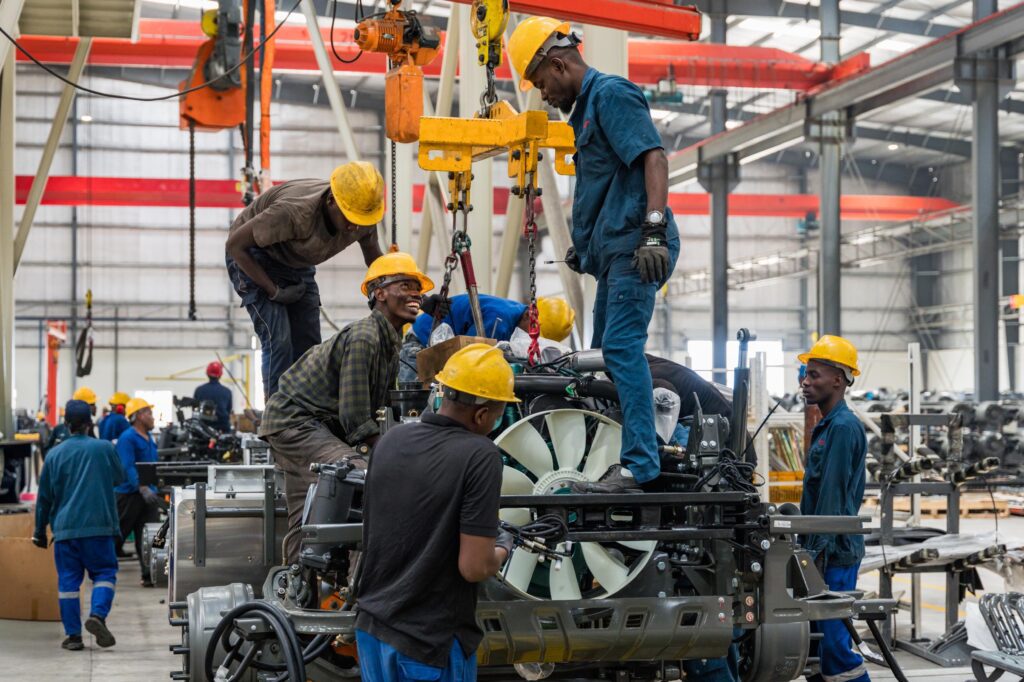
He notes that local assembly goes far beyond putting vehicle components together. “We are not simply assembling trucks. We are transferring skills, creating employment, supporting local suppliers and building an industrial ecosystem that benefits the entire country.” Saturn Corporation currently employs about 400 Tanzanians under a single production shift, with hundreds more benefiting indirectly through logistics, component supply, maintenance, transport services and other supporting industries.
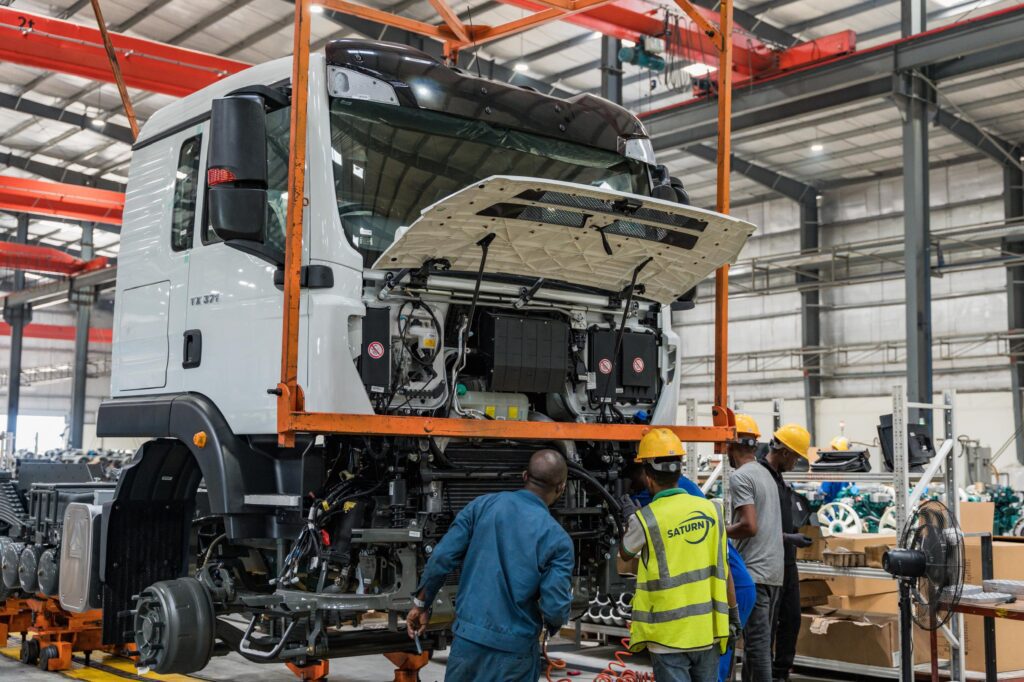
Ehul says, with the increasing demand on trucks, the company will soon introduce an evening shift. “ we are working around the clock to ensure that we support the country in meeting the annual demand for trucks which continues to increase every day” Says mehul. According to the latest investment promotion information from the Tanzania Investment and Special Economic Zones Authority (TISEZA) Tanzania’s annual demand for heavy-duty trucks is approximately 15,000 units.
Mehul says that Saturn Corporation’s current production capacity exceeds 6,000 trucks annually and has a target of reaching 10,000 trucks annually by next year 2027. “When we started operations, we were producing only about four trucks a day. Today, we are producing close to 30 trucks daily because demand has continued to rise.
Our, and we have plans to increase this to 10,000 trucks every year as the market continues to grow.” From the Government records, the volume of cargo handled through the Port of Dar es Salaam has risen sharply from 16.2 million tonnes in the 2020/21 financial year to 27.7 million tonnes in 2024/25, representing a 70 per cent increase.
The growth has significantly increased demand for heavy commercial vehicles to move goods across Tanzania and neighbouring countries. With trade, mining, construction and regional logistics expanding rapidly, demand for reliable heavy-duty trucks has reached unprecedented levels. It is with this recognition that Saturn Corporation has had to substantially increase production to keep pace.
For decades, Tanzania has relied on imported second-hand trucks to support economic growth. Today, however, locally assembled trucks are becoming an increasingly common sight on highways, construction sites, mining operations and logistics corridors across the country. Among the fastest-growing brands is the Chinese-built HOWO truck, assembled locally by Saturn Corporation.
According to Saturn, its popularity has largely been driven by affordability, durability and lower maintenance costs, qualities that have made it a preferred choice among fleet operators. Drivers who spend long hours behind the wheel say comfort has become just as important as fuel efficiency and payload capacity.
“The HOWO trucks are very strong and dependable, but there is one model we all call ‘Zuchu’. Every driver wants to drive it because it is extremely comfortable. You can spend the whole day on the road without feeling exhausted. Once you drive it, you understand why everyone likes it.” Such feedback has become increasingly common among transport companies that have shifted to locally assembled trucks.
Fleet owners say quicker access to spare parts, local technical support and shorter delivery timelines have further strengthened confidence in locally assembled vehicles. Recognising the growing popularity of the “Zuchu” truck among drivers, Saturn Corporation recently appointed celebrated Tanzanian musician Zuhura Othman Soud also known as Zuchu as its brand ambassador.
A partnership that builds on a nickname that emerged organically from drivers themselves, who had already christened one of the company’s most popular HOWO models “Zuchu” because of its reliability, attractive design and smooth driving experience. “The partnership reflects a growing sense of national pride around products assembled by Tanzanians for Tanzanians” Adds Mehul.
The company’s expansion has also received strong backing from government. Only a few months ago, the Minister responsible for Industry and Trade officially launched the expansion of Saturn Corporation’s assembly plant, paving the way for assembly of pick-up trucks and light commercial vehicles alongside its growing range of heavy-duty trucks.
During the event, the Government challenged the company to continue increasing production while creating more employment opportunities for Tanzanians. According to the company, the expansion forms part of a broader vision to transform Tanzania into a regional automotive manufacturing hub serving both domestic and export markets.
Industry players believe local assembly offers benefits that extend well beyond vehicle production. “Every truck assembled locally creates skilled employment, supports technical training, stimulates demand for local suppliers, strengthens engineering capacity, generates tax revenue and reduces the country’s dependence on imported finished products”.
Says Mehul who also opines that the efforts help retain more value within the domestic economy while positioning Tanzania as an important manufacturing destination within the East African region. Mehul believes the country’s strategic location, improving infrastructure and expanding transport network places it in a strong position to supply commercial vehicles beyond its borders.
“If we continue strengthening local manufacturing, Tanzania can become one of East Africa’s leading vehicle assembly hubs. The market is here, the demand is growing and the skills are being developed locally.”