



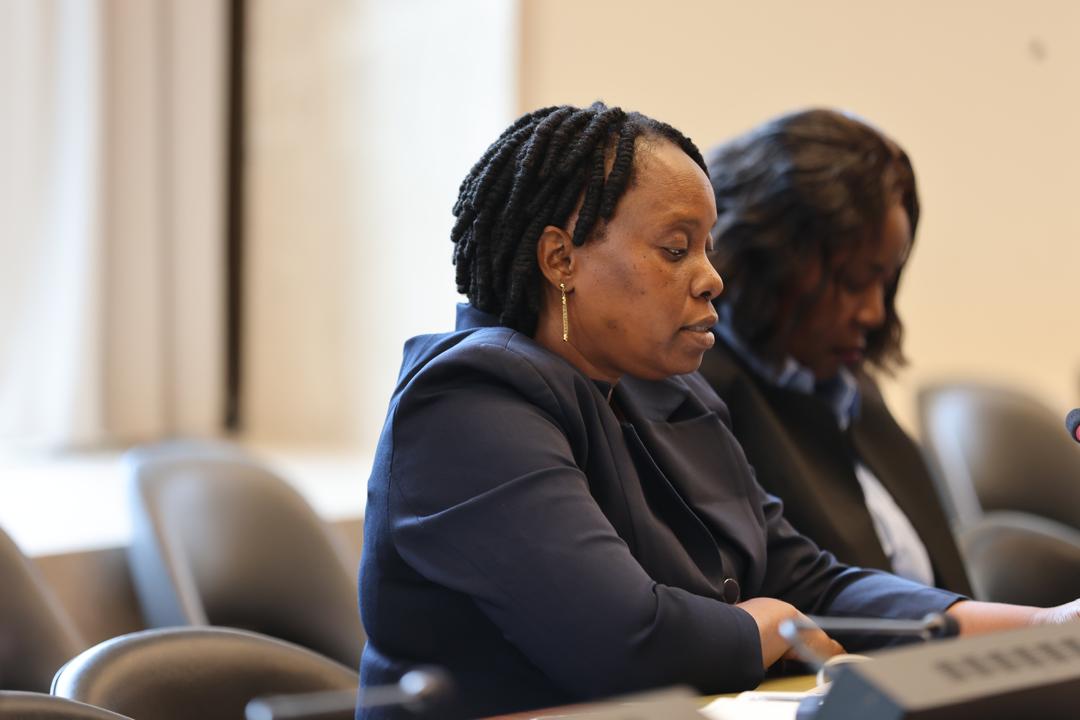
Tanzania reaffirmed its commitment to the promotion and protection of human rights through its legal, institutional, and international frameworks during a side event held alongside the 61st Session of the United Nations Human Rights Council in Geneva. The presentation set out the country’s constitutional foundations, legislative and policy measures, oversight institutions, and continued engagement with regional and international human rights mechanisms.
Speaking during the event, Ms. Beatrice Edward Mpembo said Tanzania’s human rights framework is anchored in a constitutional, legislative, and institutional structure designed to promote, protect, and realize fundamental rights and freedoms, with oversight from both State institutions and civil society actors. She noted that this framework reflects the country’s continued commitment to strengthening human rights protection while safeguarding peace, public order, and national stability.
She explained that the Constitution of the United Republic of Tanzania, 1977, as amended, remains the principal foundation for the protection of fundamental rights and freedoms through the Bill of Rights. These include equality before the law, the right to life, privacy, and other basic freedoms. At the same time, she noted that the enjoyment of rights is exercised within a framework that also protects public interest and the rights of others, reflecting the constitutional balance between rights and duties.
The presentation further noted that Tanzania has enacted a range of laws and policy measures to advance human rights across key thematic areas, including civil and political rights, the protection of vulnerable groups, socio-economic rights, and human rights litigation. It also outlined national policy frameworks aimed at promoting equality, inclusion and social justice, including the National Action Plan to Eliminate Violence Against Women and Girls (2025-2030), the Child Justice Forum (2022-2026), the Women Justice Forum (2024-2028), the National Action Plan to Eliminate Female Genital Mutilation (2026-2030), and the National Action Plan on the Rights and Welfare of Persons with Disabilities (2024-2028).
Tanzania also emphasized the importance of strong national institutions in safeguarding human rights. The presentation identified the Judiciary, Parliament, and the Commission for Human Rights and Good Governance (CHRAGG) among the key institutions responsible for human rights protection and oversight. It further noted the role of regulatory and oversight bodies established under various ministries to support compliance with national laws, protect public interest, improve service delivery, and uphold standards across sectors.
At the regional and international level, Tanzania reaffirmed its continued engagement with human rights mechanisms under both the African and United Nations systems. The presentation stated that the United Republic of Tanzania is party to major international human rights instruments, including the ICCPR, ICESCR, CEDAW, and the CRC, as well as the African Charter on Human and Peoples’ Rights. Through these commitments, Tanzania submits periodic reports, participates in review processes, and receives recommendations intended to strengthen its human rights record and governance systems.
The presentation also highlighted Tanzania’s engagement with the African Commission on Human and Peoples’ Rights, the African Court on Human and Peoples’ Rights, United Nations treaty bodies, and the Universal Periodic Review (UPR) process under the UN Human Rights Council. It noted that the location of the African Court in Arusha places Tanzania in a unique position within the African human rights system. It further stated that Tanzania is expected to submit its next UPR report in October 2026, reflecting its continued participation in international accountability and peer review processes.
In conclusion, Tanzania said it will continue to align its policies, legal frameworks, institutions, and administrative measures with its regional and international human rights obligations. The presentation said this remains central to the Government’s role in promoting and protecting human rights and advancing accountable, inclusive, and rights-based governance.