


It is rather mind boggling and to an extent rather frustrating that an insect with an average lifespan of two weeks can cause so much sickness and even deaths.
Today World Mosquito Day 20th August, Ifakara Health Institute (IHI) honours Sir Ronald Ross, whose landmark discovery in 1897 confirmed that mosquitoes transmit malaria and the finding highlighted the significant impact mosquitoes have on public health.
For over a century now, his discovery, made while serving with the Indian Medical Services at the time, continues to remind the world that defeating malaria demands a detailed understanding of parasites and efficient mosquito vectors in order to make an impact in preventing malaria.
Overall worldwide vector control has been instrumental in saving millions of lives mainly through Long-lasting Insecticidal Nets (LLINs) and Indoor Residual spraying (IRS) by preventing more that 78 percent million malaria cases between 2000 and 2015.
Experts have observed that beyond that period, global gains have stalled and if not worked on, the world could enter 2030 with an estimated 270 million cases and 600,000 deaths caused by malaria annually, which is far off the 90 per cent reduction target outlined in the Global Technical Strategy.
In Tanzania malaria remains a significant public health problem. While the malaria transmission rate has decreased from 14.8 per cent in 2015 to 8.1 per cent in 2022prvalance varies significantly by region.
Among other promising interventions, engineered gene-drive mosquitoes (EGDM) offer a complementary and potentially transformative tool. By preferential inheritance, they can spread desired traits that render mosquitoes unable to transmit Plasmodium or suppress vector populations.

Unlike conventional tools that require nightly use or repeated spraying, a well-designed EGDM is self-sustaining, equitable, and can reduce dependence on continuous human compliance. Used alongside LLINs, IRS, vaccines, and drugs; EGDM could restore vector control capability and capacity.
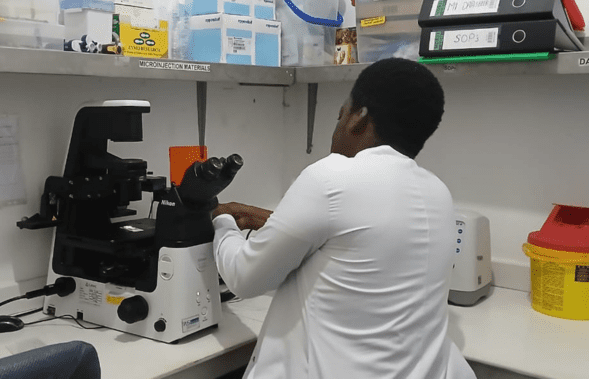
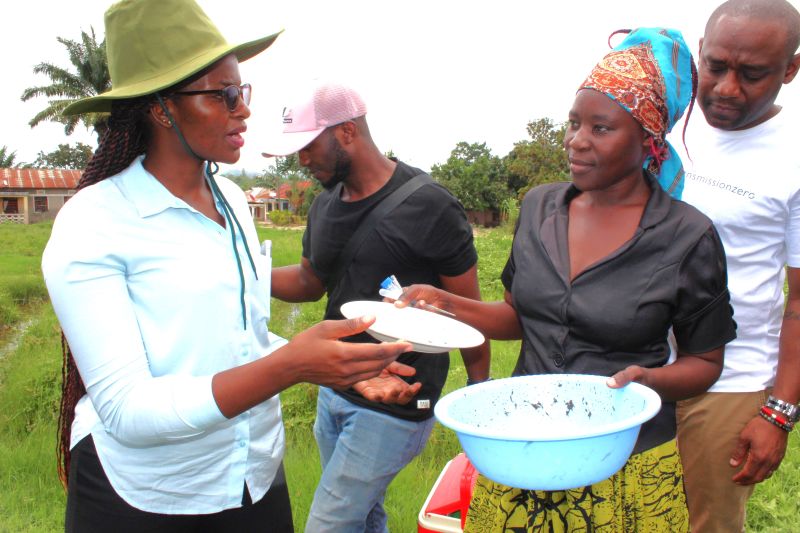
In Tanzania, the Transmission Zero (T0) Programme at IHI in Bagamoyo, exemplifies a rigorous, step by step approach to evaluating EGDM technologies. Operating under regulatory oversight, the T0 programme strongly emphasises transparent community engagement, thorough ecological risk assessments, and effective regional coordination.
These measures support responsible innovation with potential for accelerating progress toward malaria elimination, both in the country and throughout sub-Saharan Africa.
According to Project Investigator for the Transmission Zero project, Professor Dickson Lweitojera, “Insecticide resistance erodes the effectiveness of the current interventions; as mosquitoes have now adapted to biting humans outdoors and at earlier times of the day. Furthermore urbanisation increases breeding grounds, and climate variability shifts and expands malaria risk.”
He added, “As transmission persists and continues to expand into new geographies, we must think orthodoxically by innovating novel tools and integrated surveillance to urgently recover momentum toward elimination and global eradication.”
The community engagement based project is led by scientists at the Imperial College London and the Ifakara Health Institute With support from the National Institute for Medical Research (NIMR) and the Swiss Tropical and Public Health Institute.