



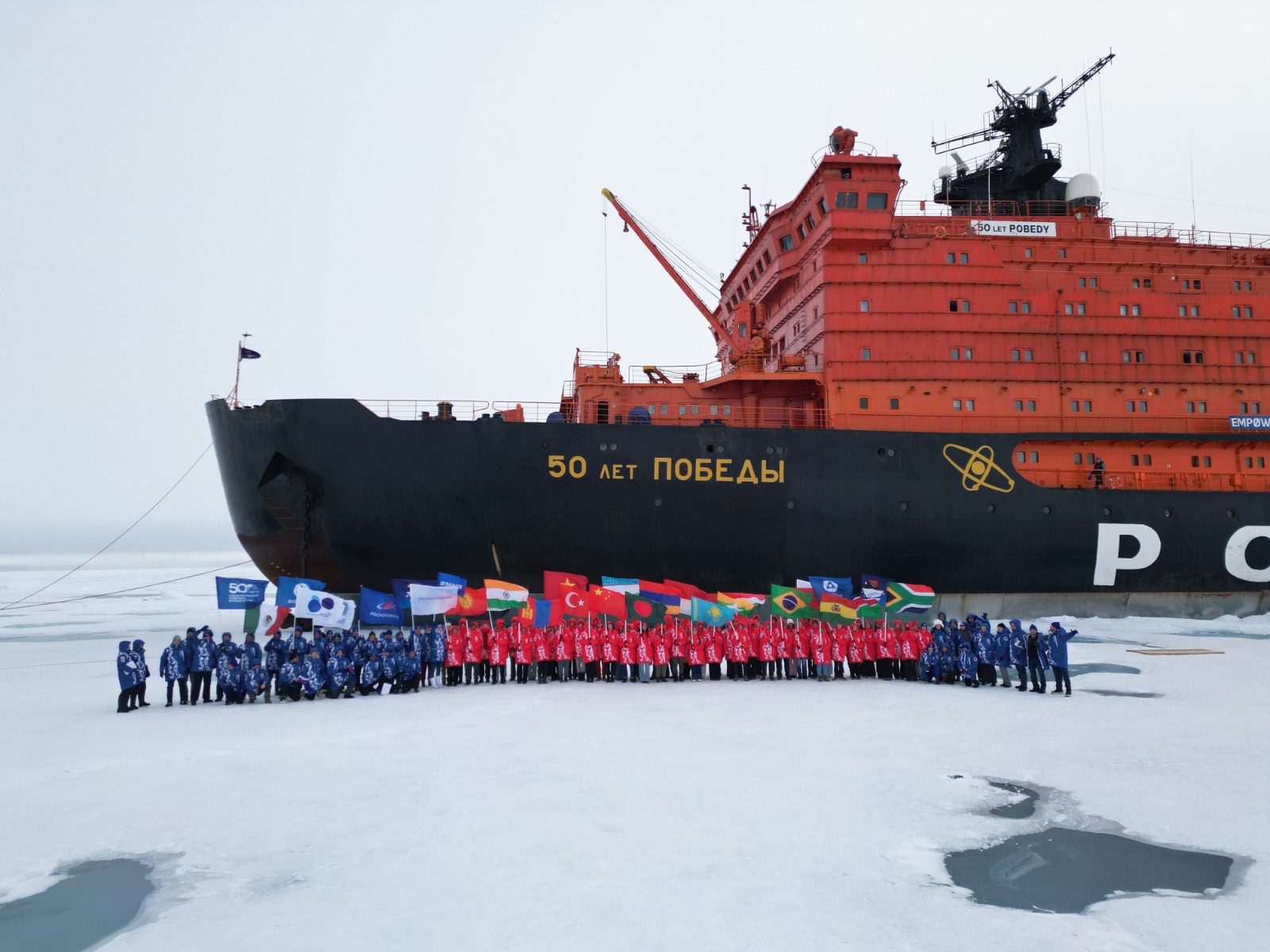
A school student from Tanzania will board a Russian nuclear icebreaker this August for a once-in-a-lifetime expedition to the North Pole
The Museum of Atomic Energy in Moscow hosted the closing event of the seventh season of the international educational project Icebreaker of Knowledge, organised with the support of Rosatom. During the event, the names of the winners were announced, among them was Xyleen Mapunda from Tanzania. In August, they will set off on an expedition to the North Pole aboard the nuclear icebreaker 50 Let Pobedy. An extensive educational and scientific programme awaits them on the icebreaker, featuring Russian and international experts: lectures, workshops, scientific experiments and other interactive activities.
In the international track of the competition, nearly 5,000 talented school students aged 14 to 16 from 23 countries, including Tanzania, South Africa, Rwanda, Namibia, and Egypt, competed for the opportunity to join the unique Arctic expedition. For some countries, participation in this voyage will be a historic event: their citizens will reach the North Pole for the first time.
The international selection process consisted of three stages. During the first stage, participants answered questions in a science quiz, testing their knowledge of natural sciences, breakthrough technologies, nuclear energy, and Arctic exploration. The second stage included a series of webinars delivered by nuclear industry experts. Participants learned about Rosatom’s advanced solutions, including technologies used to ensure the safe and sustainable development of Arctic shipping, as well as the role of nuclear energy in the future of the global economy and science.
Based on the total scores for both stages, ten finalists in each country were selected. They advanced to the final round, where they presented creative projects on the theme “How Nuclear Technologies Are Changing the World Today.” In the final round, it was important for the participants not only to demonstrate their knowledge of the topic but also to demonstrate their ability to think outside the box, construct a compelling argument, and present the material in an engaging manner. The finalists’ projects were evaluated by an international jury comprising representatives of the nuclear industry, science, education, Arctic affairs and science communication.
“Initiatives like Knowledge Icebreaker play a crucial role in fostering young people’s interest in nuclear technology and scientific and technical professions. They give school students the opportunity to see science not as something complex and distant, but as a vibrant, modern, and promising field in which they can realise their potential and contribute to the future. It’s especially valuable that the project combines education, practical familiarity with the industry, and a strong motivational component: participants begin to better understand the demand for knowledge, engineering thinking, and international cooperation in the modern world. I am confident that projects like these help young people consciously choose their career paths and inspire the next generation to pursue science and engineering”,noted Russian Nuclear Education Ambassador, 4th-year Bachelor’s student at the OINPE NRNU MEPhI Chanto Khoeun.
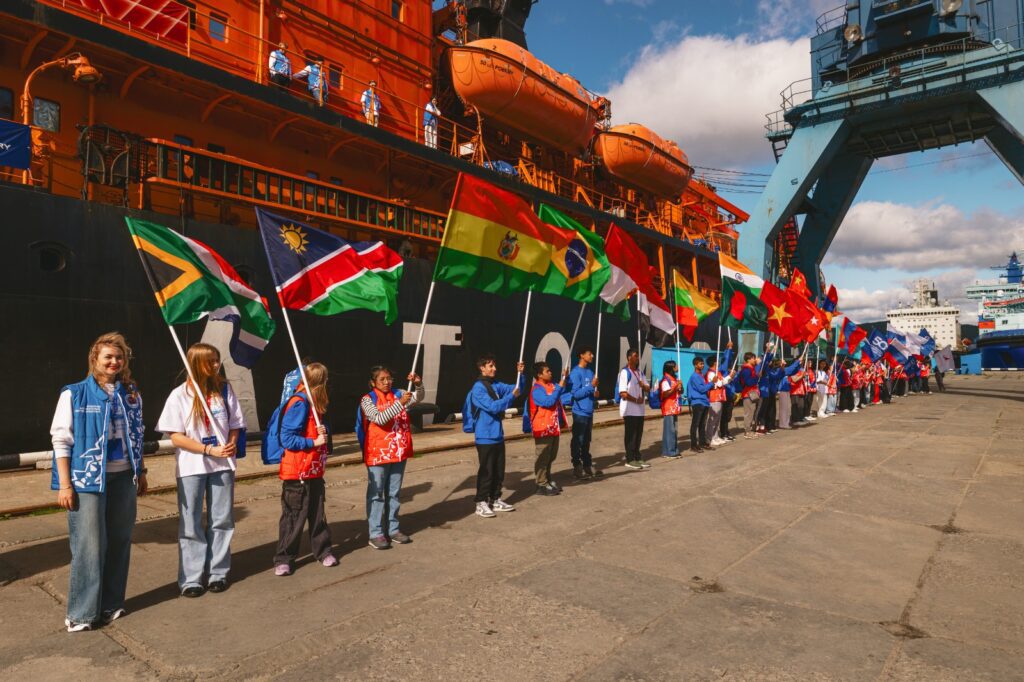
While the educational and career-oriented aspects of the expedition are central to the project, the journey also offers something profoundly personal for each participant: a direct encounter with the raw beauty of the Arctic.
“When I first found visited the Arctic, I was amazed by its diversity: ice of different types and ages, majestic icebergs, vast open spaces, and amazing wildlife. It is a place with a unique character, power and beauty that cannot be fully conveyed through words or photographs – it has to be experienced firsthand. Moments like these remain in your memory for a lifetime, and I sincerely wish all expedition participants a chance to experience the full depth and diversity of northern nature, to discover its unique beauty and atmosphere. This expedition is a unique opportunity not only to see the Arctic and appreciate its global significance, but also to witness firsthand the vital role nuclear technology plays in the development of Arctic regions today”, emphasised second officer of nuclear-powered vessels, nuclear icebreaker Taimyr, FSUE Atomflot Dmitrii Kuzmitskii.
The Icebreaker of Knowledge expedition offers a unique opportunity to see nuclear technology in action and gain hands-on experience alongside international experts. Rosatom is actively expanding its international partnerships, and Tanzania is no exception – several agreements have already been signed, including cooperation in uranium mining, healthcare, and education. One of the most notable examples is the Mkuju River Project in Tanzania’s Ruvuma region, one of Africa’s largest uranium projects, based on a resource base of 58,500 tU. In July 2025, President Samia Suluhu Hassan inaugurated a pilot processing plant at the site, which is now not only testing extraction and ore processing methods ahead of full-scale launch, but also serving as a training ground for local engineers and technicians. With construction of the main complex set to begin in 2027 and full-scale production of up to 3,000 tU annually planned from 2029, the project is expected to create thousands of local jobs in mining and related sectors and drive the development of domestic industry and infrastructure in the region.
Rosatom also runs a range of international educational initiatives for school children and students, including Atoms Empowering Africa, Global HackAtom and Nuclear Kids – part of a broader effort to cultivate a new generation of specialists who will one day join, and help shape, Tanzania’s nuclear industry.