


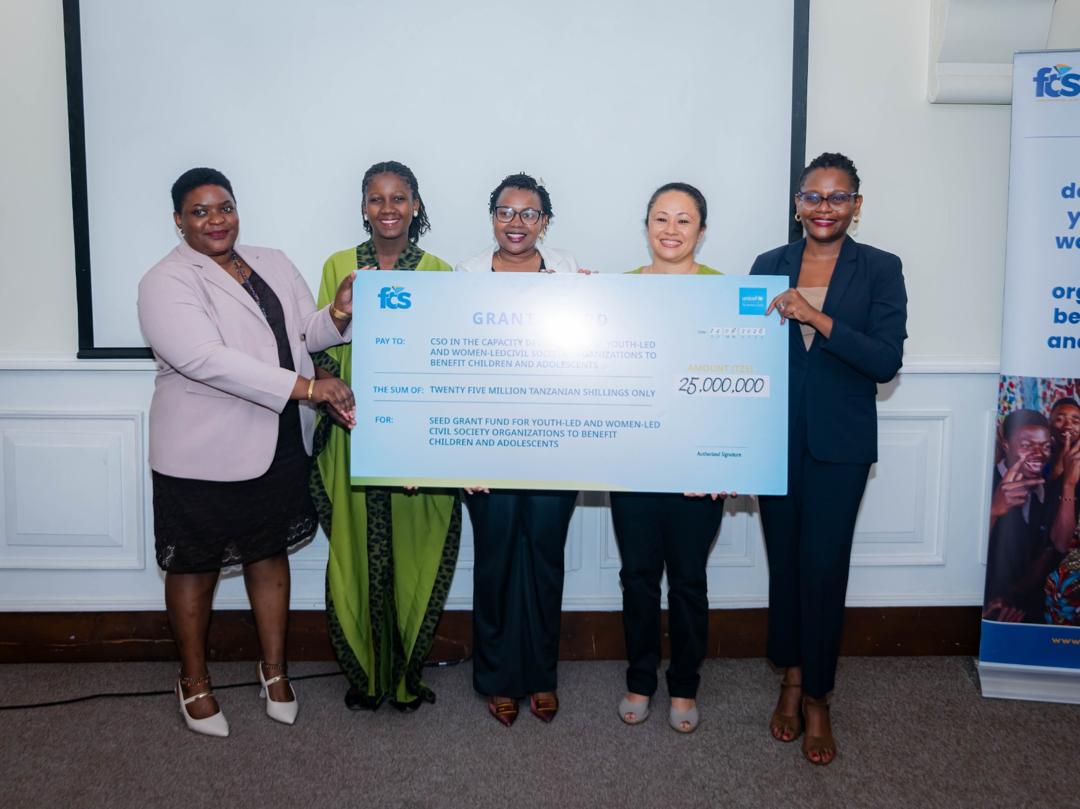
DAR ES SALAAM, August 24, 2026: Thirty youth-led and women-led Civil Society Organisations (CSOs) from Dar es Salaam, Zanzibar and Songwe have completed a three-month capacity-building programme implemented by the Foundation for Civil Society (FCS) in partnership with UNICEF Tanzania.
Following a competitive selection process, 15 of the organisations have been recommended to receive seed grants of Sh25 million each, representing a total investment of Sh375 million to support community-level interventions.
Launched in April 2026, the programme aimed to strengthen the organisational and technical capacity of CSOs working closely with communities on issues affecting children, adolescents, young people and women.
Between May and August 2026, about 90 representatives from the 30 organisations participated in online training, mentorship and in-person sessions covering project cycle management, strategic communication and advocacy, institutional administration, financial and grant management, protection from sexual exploitation and abuse (PSEA), resource mobilisation, partnership development, strategic leadership and governance.
Speaking at the seed grants awarding ceremony, FCS Deputy Executive Director and Head of Programmes Quality and Learning, Cynthia Bavo, said the programme had equipped organisations with stronger institutional capacity to turn their understanding of community challenges into practical solutions.
“These organisations already have what matters most: they are trusted in their communities and understand the problems children and adolescents face. What this programme has added is the institutional strength to act on that knowledge and account for it,” Bavo said.
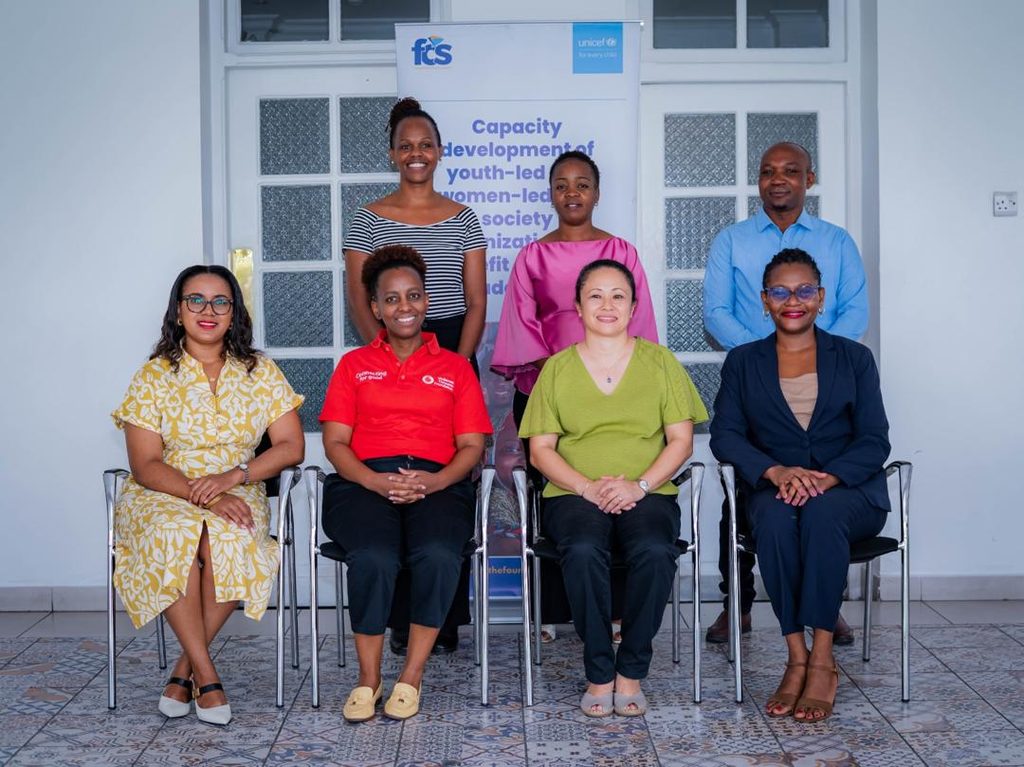
She added that the initiative was now moving from strengthening institutions to investing in solutions that the organisations were best positioned to deliver.
The participating CSOs were invited to submit concept notes for the competitive seed grant opportunity, with applications assessed against criteria including training participation, alignment with UNICEF priorities, community relevance, focus on vulnerable children and adolescents, quality of proposed interventions, child participation, gender responsiveness, monitoring, budget realism, value for money, implementation timelines and risk management.
The 15 selected organisations comprise five from Dar es Salaam, five from Zanzibar, including Unguja and Pemba, and five from Songwe. They will implement three-month community interventions focusing on child protection, education and alternative learning, adolescent wellbeing, gender equality, and prevention of violence against women and children.
A representative from UNICEF Tanzania said reaching children and adolescents who are furthest behind requires working with organisations that already have strong links with the communities they serve.
“By investing in the capacity of youth-led and women-led CSOs, and then trusting them with resources, this partnership helps build a civil society that can keep delivering for children well beyond a single funding cycle,” the representative said.
Another key issue raised during the programme was the need for CSOs to view partnerships as a complementary approach to diversifying funding sources.
Speaking on behalf of Vodacom Tanzania Foundation, a representative said CSOs should look beyond traditional donor funding and explore sustainable financing options, including private-sector partnerships, community support, donors and social enterprise models.
“Partnership is not simply another way of raising money; it is a way of building the resilience that allows an organisation to plan beyond its current grant,” the representative said.
Giving Tuesday Tanzania Country Lead, Alice Zayumba, also emphasised the importance of community-based resource mobilisation and local giving.
She said CSOs could mobilise resources through individual giving, community contributions, local philanthropy, fundraising campaigns, in-kind contributions, volunteerism, faith-based giving and private-sector support.
“Communities are not only beneficiaries; they are also a source of support,” Zayumba said.
The 15 selected organisations are currently undertaking a Manage Your Grants training scheduled for August 24–28, 2026. Following the training, funds will be disbursed, with implementation of the three-month community interventions expected to begin on September 1, 2026.