



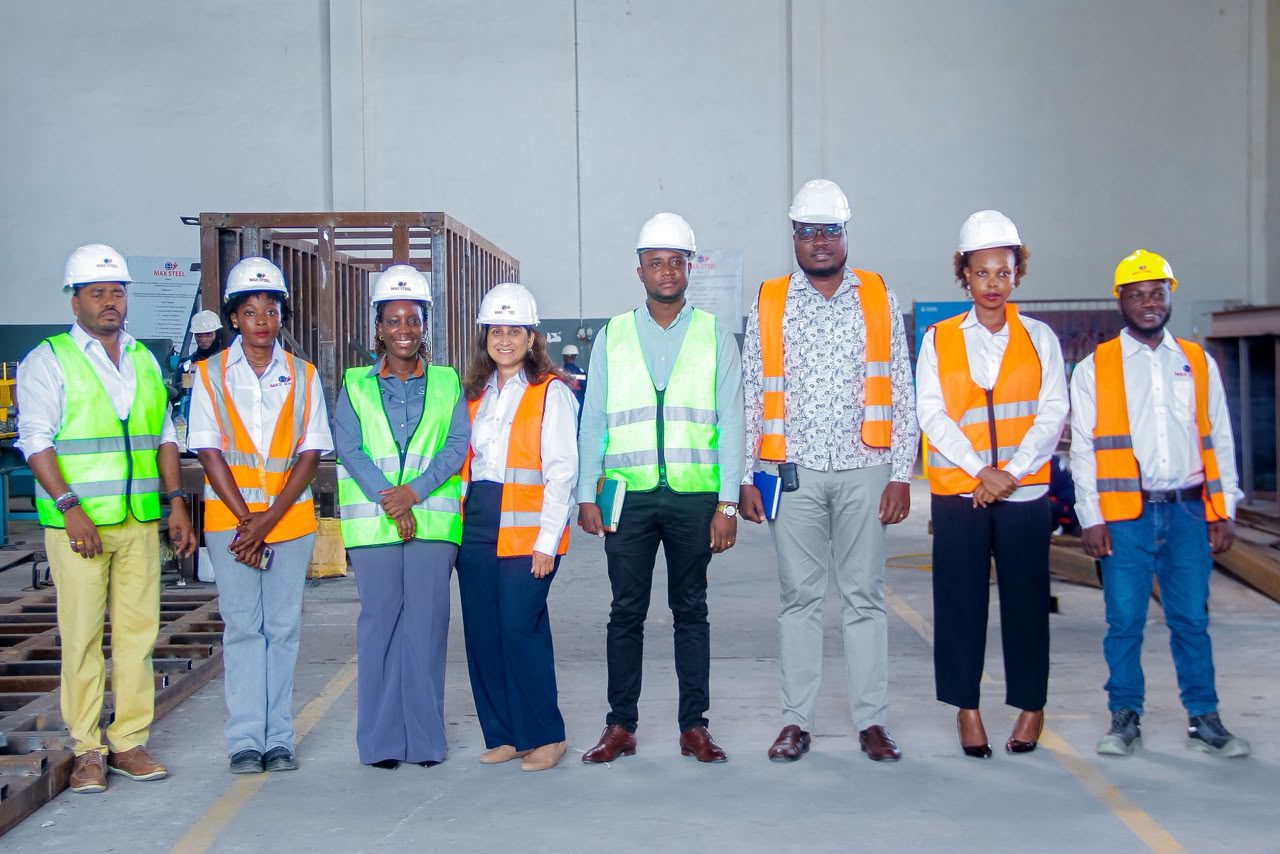
Dar es Salaam, Tanzania, 4 September 2026 — The Government has reaffirmed its commitment to protecting local investors in Tanzania’s mining sector and ensuring that they receive value from their investments.
Speaking during a tour of Max Steel Limited, a Tanzanian engineering and heavy-steel fabrication company that manufactures structural steel, tanks, silos, chutes and other engineered infrastructure for mining, construction and industrial projects, Commissioner and Chairperson of the Local Content Committee at the Mining Commission, Dr Theresia Numbi, said stronger domestic enterprises were essential to increasing Tanzanian participation across the mining value chain.
The visit comes shortly after the recent Local Content Compliance Forum, which brought together government officials, mining companies, contractors, suppliers, manufacturers and other stakeholders to discuss the implementation of local content. The forum also emphasised the need to translate policy and dialogue into increased local participation, investment and industrial capacity in Tanzania.
Dr Numbi said the Government had identified a gap in which small and medium-scale miners risked being left behind as Tanzania’s mining industry expanded. She urged established investors and manufacturers to support their growth through appropriate technology, technical expertise, skills development and access to locally manufactured equipment and infrastructure.
“The Government wants to see local investors receiving value from the resources and opportunities available in the mining sector. At the same time, the growth of established companies should create opportunities for small and medium-scale miners to participate more meaningfully in the industry,” she said.
During the visit, Max Steel Chief Operating Officer Bhavna Pandya took Dr Numbi through the company’s operations, investments and expansion plans.
Dr Numbi commended Max Steel for investing in domestic manufacturing and creating employment for more than 140 Tanzanians. She said the jobs and technical training provided by the company supported the Government’s priorities of employment creation, industrialisation and increased participation of Tanzanians in specialised sectors.
She was particularly impressed by the company’s investment in skills and technology transfer. Through its operations, Tanzanian engineers, technicians, welders, fabricators, supervisors and managers are gaining practical experience in heavy engineering and the execution of complex mining and industrial projects.
“Building local content means developing people as much as it means establishing factories. The knowledge and technical capabilities created through these investments should remain in Tanzania and strengthen the country’s industrial base,” Dr Numbi said.
Pandya said the long-term value of local content should be measured by the productive capacity, technical knowledge and employment created within Tanzania.
“Local content cannot simply mean buying locally. It has to mean building the capability to make, build and deliver locally. If Tanzania can build a CIL tank, fabricate a chute or manufacture a silo here, employ Tanzanians to do it and develop the skills to do it better next time, that is local content creating lasting industrial capacity,” she said.
Max Steel currently has a fabrication capacity of approximately 800 tonnes per month. The company is undertaking an expansion expected to increase its capacity to about 1,200 tonnes per month, positioning it to undertake larger and more technically demanding projects.
Pandya welcomed the Government’s commitment to local content but appealed for policies that would enable Tanzanian manufacturers to compete fairly with suppliers of imported finished products.
She called for a review of import duties and taxes imposed on industrial raw materials used in local manufacturing, noting that these costs can make locally produced goods more expensive than finished imports.
“When raw materials attract duties that make locally manufactured products more expensive than finished imports, domestic industry begins the race from behind. We are not asking to be shielded from competition. We are asking for a fair operating environment that recognises the jobs, skills, taxes and productive capacity created when goods are manufactured in Tanzania,” Pandya said.
She said targeted fiscal support for industrial raw materials and production equipment would enable local companies to expand, create more jobs and compete effectively on quality, reliability and price.
Dr Numbi said cooperation between the Government, mining companies and domestic manufacturers would be necessary to close the gap affecting small and medium-scale miners. She encouraged established companies to develop practical partnerships that provide smaller operators with access to technical expertise, appropriate technologies and reliable locally manufactured solutions.
The visit highlighted Max Steel’s growing capacity to support large-scale mining and industrial projects while creating employment, transferring technology and strengthening Tanzania’s domestic supply chain.
With its planned expansion and continued investment in Tanzanian professionals, Max Steel is positioning itself to manufacture a greater share of the infrastructure required by the country’s mining sector and retain more of the resulting economic value within Tanzania.